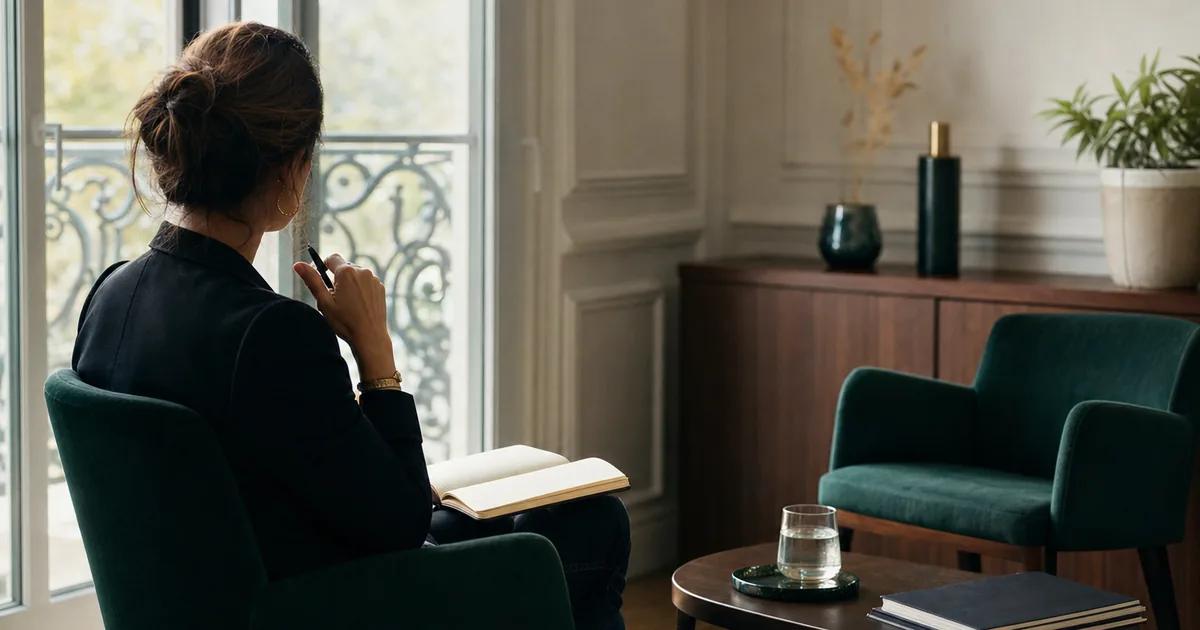

To lead is to decide with a share of uncertainty you can share with almost no one. Turning to a coach is not an admission of fragility. It is often the clear-headed move of a leader who wants to think straight before committing others.
Loneliness is not a figure of speech, it comes with the job
People speak of the loneliness of the leader as if it were a cliché. Yet it describes something very concrete. The higher you rise in an organisation, the rarer candid conversations become. Teams expect direction, the board expects results, peers are sometimes internal competitors. Everyone listens to the leader through the filter of their own stakes. Few places remain where you can think out loud without the slightest hesitation being read at once as a signal.
There is nothing pathological about this loneliness. It comes with the position. A leader has to hold a course, embody stability, absorb other people’s worry without always being able to set down their own. Over time, that wears out a precious resource: the ability to surprise yourself, to question an intuition, to hear what you avoid telling yourself. Coaching does not fill an emotional gap. It restores a place where thinking can move freely, with no power at stake and no risk of being misread.
The moments when you look for support
Few leaders call a coach out of comfort. It is almost always a specific moment that sets things in motion, even if it is not always named clearly at first. Taking up a new post, for instance, and discovering that the reflexes that brought success yesterday no longer suffice at the new scale. A reorganisation to lead, whose human consequences you sense before you have settled how to carry it out. An executive committee where disagreements are no longer voiced, and where silence weighs more than debate.
There are more diffuse signals too, often noticed before they are put into words. A tiredness that holidays no longer resolve. A new irritability in situations you used to handle with ease. The feeling of running from one meeting to the next with no time left to think about what you are deciding. Sometimes it is the reverse: a success that disorients, a promotion that isolates further, a milestone that leaves you oddly unsatisfied. The need to hold a role without respite ends up covering the truer question — am I still leading in line with what matters to me?
None of these situations is a dysfunction. They are turning points, where a structuring decision is taking shape and where there is much to gain from not taking it alone, in haste or in reaction. The reflex to act fast is precious in an operational emergency. It becomes a trap when the question is one of direction, of meaning, or of how to bring others along.
Thinking straight before acting
This is probably the heart of it. A leader does not need someone to think for them — and rarely wants it. They need a space in which to think better: to separate what belongs to the actual situation from what their own history, fears or certainties project onto it. Many hard decisions are not hard for want of options. They are hard because you can no longer see the situation clearly as it is.
Working with a coach is precisely about slowing down in the right place. Rephrasing a badly framed problem. Naming what you avoid. Examining an intuition instead of following or suppressing it. That slowing down is not wasted time; it is the condition of well-adjusted action. You then act faster, because you act more accurately, with fewer reversals and fewer decisions to correct.
What coaching makes possible
Serious coaching promises no result, and one should be wary of anyone who guarantees one. What it offers is a frame. A trained partner, bound by confidentiality, with no stake in the organisation, who expects nothing of the leader except that they think for themselves. Within that frame, things become possible that are possible nowhere else.
There you can set down a doubt without it becoming a rumour. Acknowledge a mistake without paying the political price. Explore a possible decision before exposing it. The coach brings no ready-made answers and no model to apply. They ask the questions no one else is in a position to ask, and they hold the bar when the leader would be tempted to settle for a comfortable answer. It is work of lucidity more than of reassurance.
Over time, what builds is not dependence but its opposite. The leader refines their own way of thinking through decisions, spots their blind spots earlier, and regains a form of inner freedom in the exercise of their role. Theexecutive coaching offered by Oxygen Coaching follows this logic: helping you see clearly before deciding, without ever standing in for the responsibility of the person who leads. The approach and background of Céline Thomas say more about its spirit.
A step, when the moment is right
Turning to a coach is not looking for a solution to a problem; it is giving yourself the means to think before you decide. If one of these situations resonates with yours, a first conversation is enough to gauge whether it makes sense, with no commitment. You can get in touch to talk it through, simply.